
28th April 5pm – 6:30pm (UK time)
Register on Eventbrite for a Zoom link
In the wake of the second Trump presidency, ‘sanctuary cities’ are once again in the spotlight. One of Trump’s first executive orders was ‘Protecting the American People Against Invasion’ which has been described as ‘doubling down’ on his attack on cities that do not cooperate with federal immigration enforcement. Cities not only have been threatened with defunding (as in Trump 1.0) but also individual Mayors have been threatened with prosecution if they ‘get in the way’ of mass deportations.
Cities have long been seen as the site of progressive politics where national hostility towards migrants might be ameliorated. Some cities have been heralded as places where migrants find safety or at least the ability to live a ‘liveable life’. Grassroots urban solidarity movements advocating for a ‘politics of presence’ have inspired new practices of urban citizenship. In addition, the actions of municipal governments across Europe, North America and beyond have made bold innovations in outwardly contradicting hostile national policies. These policies have taken various forms including municipal ID cards, ‘don’t ask, don’t tell’ policies enabling precaritised residents to access public services, firewall policies that stop data being shared between municipal and national government, and even limited voting rights in municipal elections.
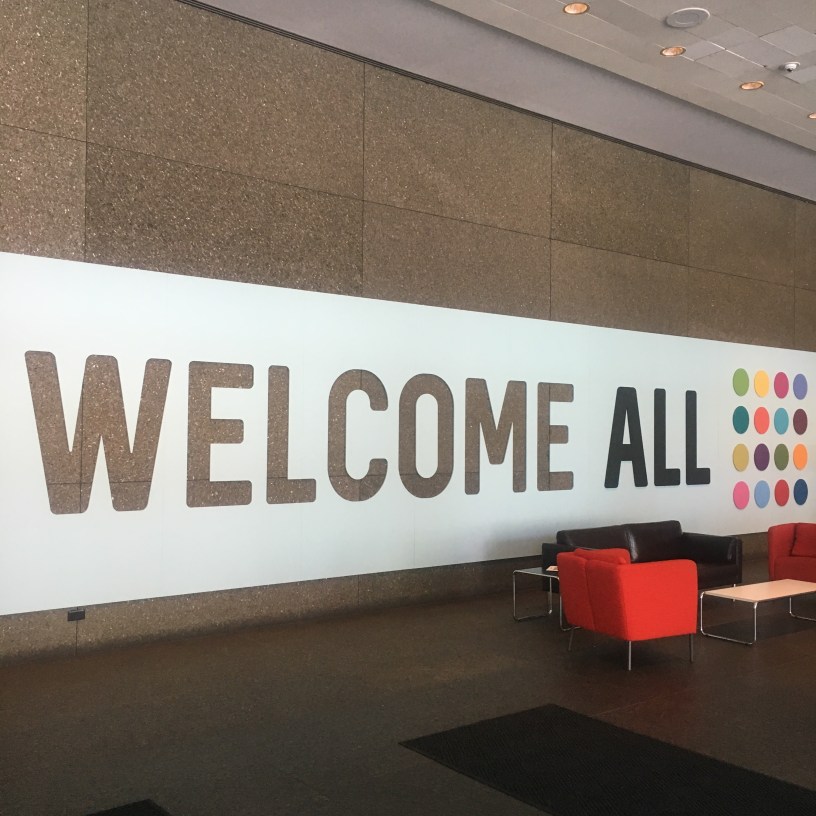
However, with the rise of right-wing populism and openly racist authoritarian governments, cities are under strain. In the UK, austerity and hostile environment policies make it increasingly difficult for cities to support precarious migrants. The criminalization of solidarity and restrictions on rights to protest further increase pressure. This shifting context raises questions about what political potentials might be opened or foreclosed in cities that openly declare themselves ‘sanctuary’ or ‘welcoming’ cities and why some cities choose to take this path. What is the often unseen work that goes into creating and maintaining a ‘sanctuary’ or ‘welcoming’ city? What can they really achieve despite the huge limitations on their budgets and legal/political power? How might municipal governments, grassroots activists and migrants themselves find new ways to contest hostile environment policies in cities today?
This webinar presents two forthcoming books that grapple with these questions. First, Rachel Humphris’ Making Sanctuary Cities (Stanford University Press) and Jacqui Broadhead’s Welcoming Cities (University of Bristol Press). They will be discussed by Rupinder Parhar, Head of Equalities, Greater London Authority.
Rachel Humphris’ Making Sanctuary Cities takes a comparative approach across pioneering sanctuary cities in Canada, UK and USA. Exploring Toronto, San Francisco and Sheffield, Humphris sees these cities as part of a shared anglophone space of law and governance rooted in colonial histories. Accounting for each cities’ socio-historical specificities, she traces how a similar politics of deservingness plays out across these three cities sanctuary policies. The book uncovers how liberal citizenship is undermined by the very thing that makes it worth investing in: the promise of equality. However, the book also reflects on where new radical forms of citizenship and community are being created, intersectional solidarities imagined, and a transformative politics might be fostered.
Jacqui Broadhead’s Welcoming Cities – how newcomers shape urban policy making outlines a policy framework for the inclusion of newcomers locally, drawing on learning and examples from 12 UK cities who have participated in the Inclusive Cities programme since 2017. The process of welcoming engages with the big questions of city governance, provision and even the city’s sense of identity – asking how can we live well and thrive together? How do we define what a truly welcoming city would look like and how can we work together to build more inclusive and welcoming cities? The book engages with processes of welcoming in warm and cold policy environments – asking how and why cities promote welcoming and how it has come under strain from a hostile national environment.
Speakers
Rachel Humphris is a Senior Lecturer and Co-Director of the Centre for the Study of Migration at Queen Mary University of London. She conducts ethnographic research on the welfare-migration nexus in contexts of rapid urban change in North America and Europe. Her published research can be found in Antipode, Geopolitics, Sociology, the Sociological Review, and the Journal of Ethnic and Migration Studies, among others. Her first monograph, Home-land: Romanian Roma, Domestic Spaces and the State won the British Sociological Association Philip Abrams Memorial Runner-Up Prize in 2020. She has worked with numerous international organisations, national and local governments on migration issues.
Jacqui Broadhead is Director of the Global Exchange on Migration and Diversity, at the Centre on Migration, Policy and Society (COMPAS) at the University of Oxford, managing knowledge exchange and research projects. Jacqui’s own work focusses on local government, integration and welcoming, including leading ‘Inclusive Cities’ – a network of 12 UK cities focussed on improving integration outcomes. Jacqui previously worked in local government – leading one of the first programmes to accept refugees through the Syrian VPRS Scheme. She is a trustee of Justice Together Initiative, aiming to improve access to immigration advice.
Rupinder Parhar has worked for over a decade on policy, research and commissioning on issues including migration, destitution, equalities and access to justice within local government and the voluntary sector. Rupinder has previously published research on issues including access to justice, no recourse to public funds and mental health needs of separated children. Rupinder sits on the Expert Advisory Group for The Migration Observatory and the Advisory Group for Justice Together Initiative. In her spare time, she occasionally writes on issues relating to migration.
Chairs: Ben Gidley (Birkbeck) and Nando Sigona (University of Birmingham)

