

UPDATE: MORE TICKETS HAVE BEEN ADDED
Social Scientists Against the Hostile Environment webinar
Flags and Performative Nationalism
Monday 2nd February 5pm-6.30
Format: Online webinar
Speakers: Michael Billig, Kojo Kyerewaa, Sivamohan Valluvan
Please register on EventBrite to receive the joining link
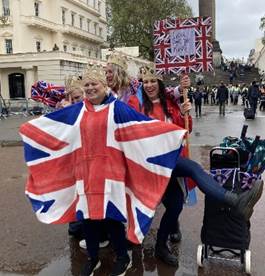



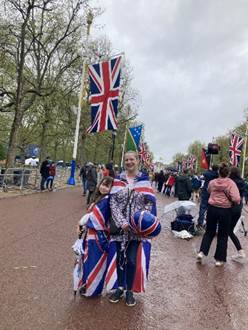
National flags are potent symbols whose recent proliferation in UK everyday spaces has pushed questions of performative nationalism onto public agenda, exposing tensions between claims of unity and their use as instruments of exclusion and control.
SSAHE’s Flags and Performative Nationalism webinar examines the symbolic and political life of national flags, tracing how they are mobilised across everyday and institutional contexts to reinforce or contest national identities. It foregrounds how these practices are reconfigured through gendered, racialised and postcolonial relations, and how they crystallise broader struggles over belonging and recognition.
In concert with Michael Billig’s account of ‘flagging the nation’ and ‘banal nationalism’, the webinar situates national flags within the routine, taken-for-granted practices that keep nationalism continually in view. It connects these to research on the global mainstreaming of far-right extremism, including how aesthetics, branding and symbols embed extremist narratives in ordinary spaces and styles, and to activist responses to this.
Feminist and gender scholarship shows that women’s bodies and images have long been used as carriers and symbols of the nation, even as nationalist projects marginalise, securitise or criminalise women. This is particularly the case for migrant and racialised minority women. At the same time, there are queer appropriations, counter-flags and artistic and everyday practices that repurpose or refuse flag iconography and unsettle militarised, masculinist understandings of patriotism
The webinar interrogates the affective charge and historical sedimentations of flag politics, showing how colonial governance, imperial imaginaries and contemporary border regimes structure and enable performances of loyalty and dissent. These dynamics underpin unfounded claims to “tradition” and shape who can safely “wear” and claim national belonging.
The webinar also considers the affective infrastructures that sit ‘beyond’ the flag, including pubs and other sites of conviviality framed as quintessentially national spaces. It asks how such spaces become sites where national symbols are claimed, contested or refused, and where alternative, more egalitarian imaginaries of public life may be articulated.
Speakers
Michael Billig: Hanging Union Jacks by Roadsides: Is Patriotism the Last Resort of the Scoundrel?
The policy of the Reform UK party to hang Union Jacks around Britain is generating controversy as local councils controlled by the party have been erecting flags on roadsides. This talk looks at Reform’s justifications and their opponents’ criticisms of this policy in Nottinghamshire. Reform claims that the flags will bring people together while opponents dispute this. Reform describes its policy as patriotic, while opponents try to move the debate away from the value of patriotism to concentrate on the cost of the flags. This controversy is examined in relation to the eighteenth century figure of Samuel Johnson. Not only has Johnson been seen to embody a certain type of Englishness – a contrarian libertarian, unafraid to shock, as if he were an eighteenth century Nigel Farage. However, one of Johnson’s historically enduring sayings is that patriotism was the last resort of the scoundrel. A comparison between Johnson and Farage reveals Reform’s leader as a faux Johnsonian. On the issue of admitting freed slaves to Britain as free persons, Johnson, a consistent opponent of enslavement, was on the side of the angels. This is not just demonstrated in his expressed views. More importantly it is revealed in his actions towards his one-time manservant and later his friend, the freed slave Francis Barber. In paying for Barber’s adult education, Johnson told him that those who cannot read are never truly free.
Michael Billig is Emeritus Professor of Social Sciences at Loughborough University. , working principally in contemporary social psychology although much of his work crosses disciplinary boundaries in the social sciences. He has published books on a wide variety of topics: fascism; nationalism; rhetoric and thinking; the royal family and ordinary families, including the highly influential and much cited Banal Nationalism. His latest book is Politicians Manipulating Statistics: How they do it and how to stop them (2025).
Kojo Kyerewaa: Challenging narratives through protest, community organising and collective action: BLM UK
This talk reflects on how BLM UK emerged from grassroots organising to confront structural racism in Britain. It examines how ideas of “British values” and national symbols, including the St George’s and Union flags, are used to exclude minoritised and racialised communities, and how BLM UK has challenged these narratives through protest, community organising, and collective action
Kojo Kyerewaa is the National Organiser of Black Lives Matter UK (BLMUK) and the only full time member of staff for the organisation. BLM UK was founded by anti-racist activists in 2016, and it was inspired but is independent from the US based organisation. Kojo is also a founding member of Against Borders for Children, a grassroots campaign which successfully in 2021 deleted the UK Home Office child migrant database.
Sivamohan Valluvan: Class camaraderie beyond the flag: reflections on the politics of resentment, sociability but also pubs
Many have convincingly argued that today’s chilling English nationalism feeds less off affirmation and confidence and more from a toxic mix of ressentiment and revanchist resignation. This is a nationalism that isn’t about celebrating Englishness or believing in a brighter future, as much as it is about being angry about things not working and finding a substitute patriotic pleasure in resenting and/or mocking others – as a righteous end in itself. Whilst acknowledging much that is generative about such analysis, this talk explores the notionally more affirmative promise that is still implicit in such a renewed flagging of the nation. The more dangerously seductive element of ‘postliberal’ new right nationalism might in fact be the collective camaraderie and integrity that they promise. Building on a forthcoming book, Pubs for the People, I argue that these communitarian invocations of ‘flag, faith and family’ work through seemingly innocuous everyday attachments – e.g. the pub. Such proprietary claims to pubs and its ilk promise a sociality and relief amid the atomised and thankless individualism of the present. Through a counter-reading of pubs, I suggest that an anti-nationalist left would do well to reclaim such sites of everyday sociability. The socialist writer, Jonas Marvin, argues that the question of the ‘Good Life’ needn’t be surrendered to the communitarian right. Ideals of publicness and social infrastructure remain the natural preserve of left politics; and more assertive attempts to re-narrate our own version of public luxury are again needed.
Sivamohan Valluvan is a sociologist at the University of Warwick and is the author of the Clamour of Nationalism. He is also the co-author of a British Academy report, Reframing the Left Behind: Race and Class in Post-Brexit Oldham, and, with Amit Singh, the forthcoming Pubs for the People.
Chairs/organisers: Molly Andrews, Feride Kumbasar, Ann Phoenix, Shirin Rai
 Social Scientists Against the Hostile Environment