
Is Britain really an Island of Strangers? Migration and racism in a global authoritarian moment
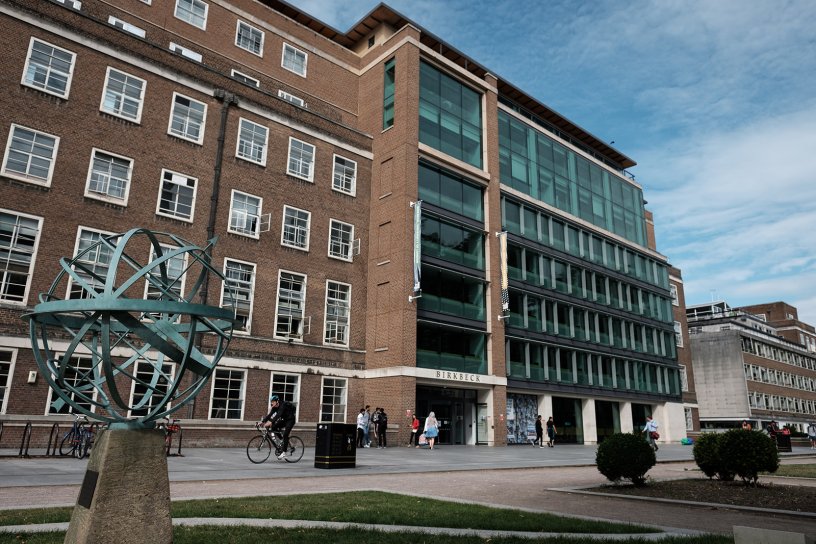
ROOM B20, Birbeck University of London, Main Building
Globally, politics has taken an authoritarian turn, with the demonisation and othering of migrants and negatively racialised people a central plank in the electoral politics of the authoritarian right. In the UK, the radical right in the form of Reform UK is dominating opinion polls, and the Labour government’s response, embodied in its recent White Paper, “Restoring control over the immigration system”, has been to affirm the arguments made by Reform, which blame previous governments of doing “incalculable harm” through an “experiment in open borders” leading to “an island of strangers”. Proposals around “earned” settlement and citizenship will radically intensify the hostile environment, and discourses around “skills” entrench class and racialised divisions deeper into immigration law. How can scholars and activists deploy knowledge and analysis to understand, respond to and contest the global authoritarian turn?
Thursday 19 June evening, Friday 20 June all day
FREE – REGISTER ON EVENTBRITE TO ATTEND
Birkbeck, central London
DRAFT PROGRAMME:
Thursday 19 June
Evening session: 6-8 pm
Rethinking anti-racist activism and pedagogy, in memory of Phil Cohen
This session will celebrate the legacy of anti-racist scholar, activist and teacher Phil Cohen, whose work always bridged the gap between academia and practical intervention, including in schools and youth work contexts, while deepening a conjunctural analysis of “multi-racist Britain” and its changing contours. It will reflect on what anti-racist activism and pedagogy mean in the current crisis.
Introduced by Nira Yuval-Davis, Professor Emeritus, University of East London
Confirmed speakers:
- Ann Phoenix, Professor of Psychosocial Studies, Social Research Institute, UCL Institute of Education
- John Solomos, Professor Emeritus of Sociology, Warwick University
- Penny Rabiger, anti-racist educator, co-author of ‘Anti-racist practice: a lens, not an activity’, Co-founder of the BAMEed Network
Friday 20 June
Arrive 9 am: registration and networking
Note: As we are powered completely by voluntary labour and have no budget, we are not providing refreshments other than water, but there is a coffee outlet in the building
Session I: 9:30-11 am
The contours of the current moment: national, European and global
This session will reflect on the global and comparative dimensions of the current authoritarian turn and its implication for immigration policies, and then how that plays out in the UK itself from both a legal and civil society perspective. What are the key shifts? How can we compare different legal contexts? What are the key legal and political challenges for those working in the field?
Chair: Angelo Martins Junior, Assistant Professor in Sociology, School of Social Policy and Society and Institute for Research into Superdiversity (IRiS), University of Birmingham
Confirmed speakers:
- Giorgia Donà, Centre for Migration, Refugees and Belonging, University of East London
- Zoe Bantleman, Legal Director of the Immigration Law Practitioners’ Association (ILPA), a barrister, and an editor of the Journal of Immigration, Asylum & Nationality Law.
- Zrinka Bralo, Chief Executive of Migrants Organise
Session II: 11:30-1
Changing the narrative on race and migration, co-sponsored by the Runnymede Trust
This session, on deputisation, othering, and the making of the “unwelcome”, will explore the “hostile environment” not solely as a set of immigration policies, but as a wider social and political technology – one which embeds surveillance, conditionality, and exclusion into everyday life. The session will critically examine how the state has increasingly delegated immigration enforcement to ordinary citizens, and how the hostile environment has been sustained not only through law but also via bureaucracy, institutional structures, and dominant cultural narratives, especially around who counts as “deserving” and who as “undeserving”. How can we offer both critique and constructive alternatives?
Chair: Aqsa Suleman, Runnymede Trust
Speakers:
- Bridget Anderson, Professor of Migration, Mobilities and Citizenship, School of Sociology, Politics and International Studies, University of Bristol
- Maka Julios Costa, Department: Linguistics and English Language, Lancaster University, co-author of A hostile environment: language, race, politics and the media
- Camila Montiel Mccann, Runnymede Trust, co-author of A hostile environment: language, race, politics and the media
Lunch (not provided)
Small group session: 2:15-3:15 pm
Moving forward: Discussions and reflections
How can SSAHE move forward in the current movement? What are the challenges on the horizon, how can we build our movement to face them? What should our specific priorities be in the coming year?
Chair: Molly Andrews, Honorary Professor, Social Research Institute, University College London
Final plenary: 3:30-5 pm
Understanding and resisting the hostile environment:
This session will sum what the current social scientific understanding of race and migration offers for an analysis of the deepening hostile environment, and reflect on how we can move from understanding to contesting and resisting it.
Chair: Ben Gidley, School of Social Sciences, Birkbeck University of London
Confirmed speakers:
- Floya Anthias, Emeritus Professor of Sociology and Social Justice at the University of Roehampton
- Nando Sigona, School of Social Policy and Society and Institute for Research into Superdiversity (IRiS), University of Birmingham
- Aaron Winter, Senior Lecturer in Sociology (Race and Anti-Racism) and Director of the Centre for Alternatives to Social and Economic Inequalities (CASEI), Lancaster University
 Social Scientists Against the Hostile Environment